
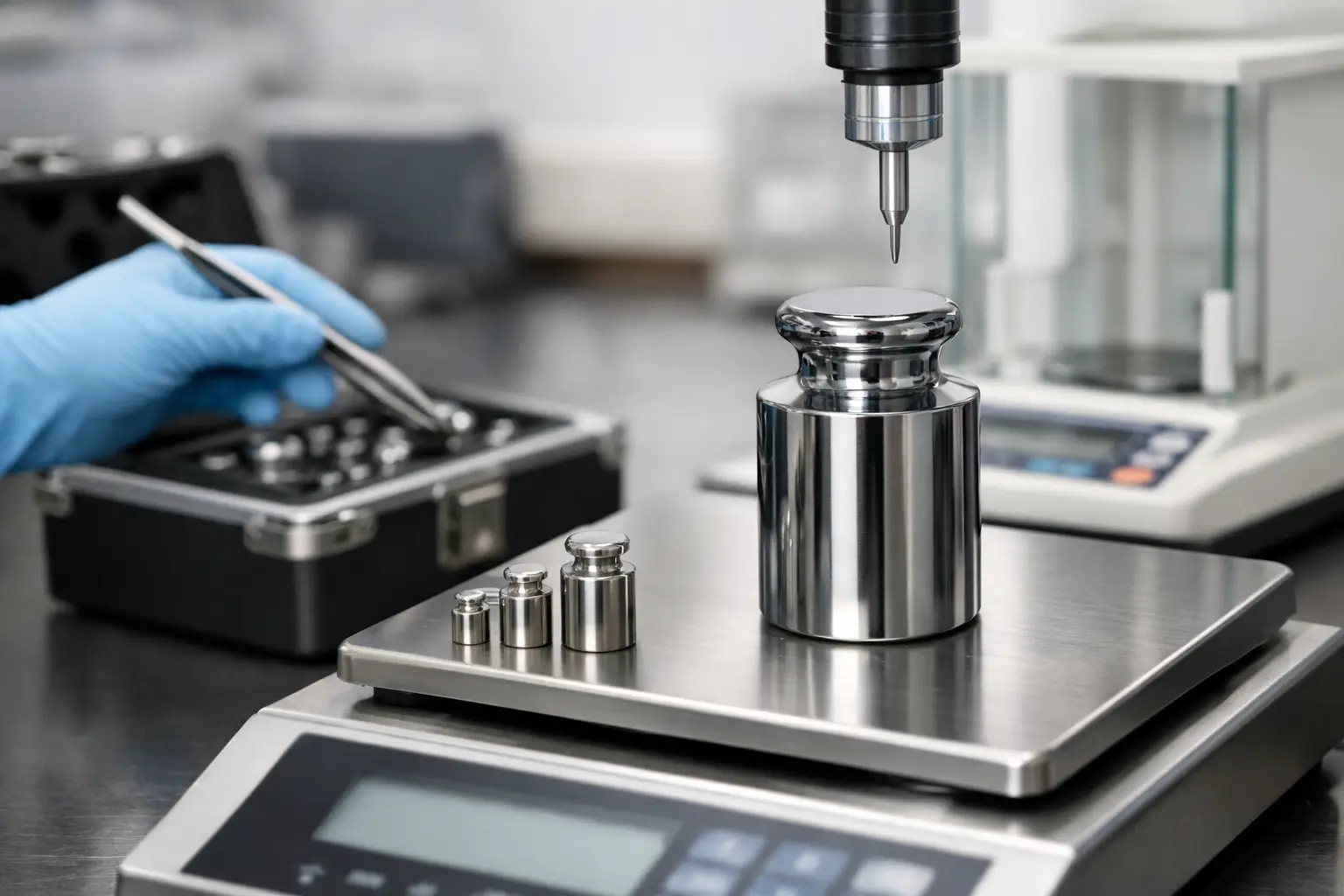
A few grams might not look like much on a display, but over a busy trading day they can affect pricing, stock control and compliance. That is why scale calibration verification matters for any business relying on weighing equipment to sell product, portion food or maintain accurate records. If your scale is being used in day-to-day operations, accuracy is not just a technical detail. It is part of running a business properly.
For many operators, the confusion starts with the terminology. Calibration and verification are often treated as the same thing, but they are not. They work together, and both have a place depending on how the scale is used, where it is installed and whether it is being used for trade.
What scale calibration verification actually means
Scale calibration verification is the process of checking that a scale is weighing within the required tolerance after it has been calibrated or adjusted. Calibration itself involves comparing the scale against known test weights and, where needed, adjusting it so the readings are correct. Verification confirms the result and documents that the scale performs as it should.
That distinction matters. A scale can be adjusted, but unless its performance is then checked properly across its operating range, you still do not know whether it is ready for use. In trade environments, that can create real risk. In kitchens, retail counters, produce stores and market setups, an inaccurate scale can lead to undercharging, overcharging or disputes with customers.
Verification also looks beyond one single weight reading. A proper check considers whether the scale is accurate at different load points, whether it returns to zero correctly, and whether it performs consistently in the conditions where it is actually being used.
Why accurate scales matter in everyday business
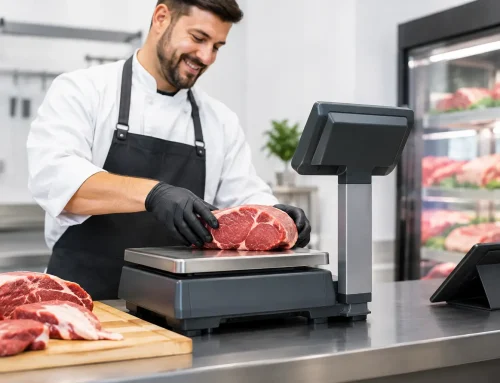
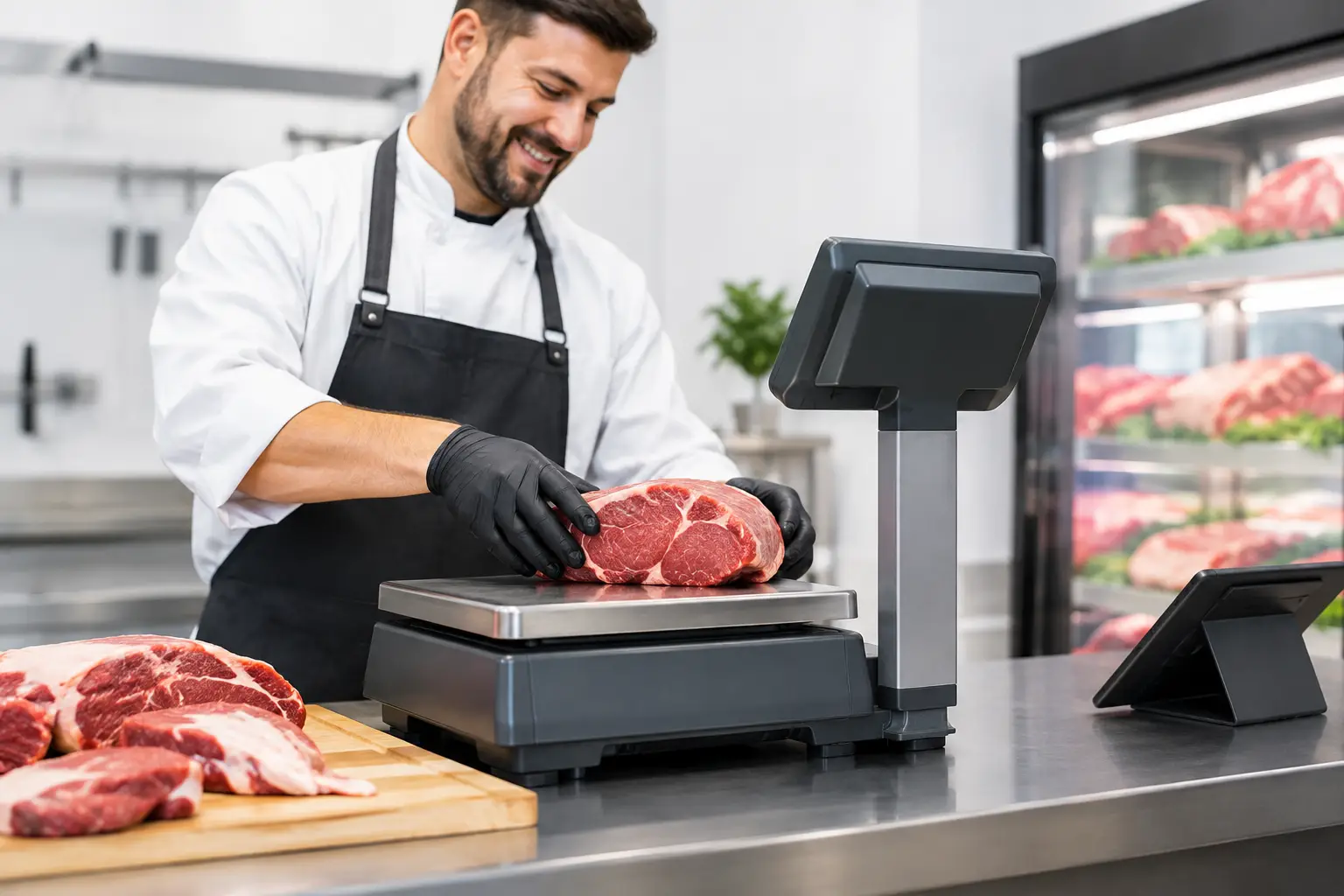
If you run a butcher shop, deli, café, fresh produce outlet or any operation selling by weight, your scale is tied directly to revenue. Even a small inaccuracy, repeated across hundreds of transactions, can quietly cost money. In some cases the business loses margin. In others, customers pay more than they should, which can damage trust quickly.
There is also the compliance side. Trade-used scales need to meet legal requirements, and that means they must be suitable for the job and maintained properly. A scale that has drifted out of tolerance is not something you want to discover during a busy service or after a complaint.
Outside direct sales, accurate weighing still matters. Portion control, recipe consistency, stock receiving and packaging all depend on dependable readings. If your team is working around a scale they do not trust, they either waste time double-checking everything or they make decisions based on bad data.
When scale calibration verification is usually needed
The right timing depends on the equipment, how heavily it is used and the environment around it. A scale in a clean, stable back-of-house area may hold accuracy longer than one being moved between market sites, bumped on a counter or exposed to temperature changes.
In practical terms, scale calibration verification is commonly needed after installation, after a repair, after the scale has been moved, or when there are signs the readings are inconsistent. It is also sensible as part of a regular maintenance schedule, particularly for trade-approved equipment.
There are warning signs worth paying attention to. If the display struggles to return to zero, if known items seem to weigh differently from day to day, or if staff start mentioning unusual readings, do not ignore it. Scales rarely fix themselves. Small faults tend to become bigger disruptions if they are left alone.
What happens during scale calibration verification
A proper visit should be methodical, not rushed. The technician will inspect the scale, check its condition and confirm that it is appropriate for the application. That can include looking at the location, the surface it is sitting on, nearby vibration, airflow and power supply, because all of those can affect accuracy.
Test weights are then used to compare the displayed readings against known values. If the scale is out, calibration or adjustment may be carried out. Once adjusted, the scale is tested again to verify accuracy across relevant points of its range. Repeatability, zero tracking and general performance are also assessed.
For trade-related applications, documentation is important. Verification is not just about having confidence in the scale on the day. It is also about having a clear service record showing what was checked and how the equipment was left. That record can be useful for compliance, internal quality control and future servicing.
Why environment and usage affect accuracy
One of the most common assumptions is that if a scale was accurate when it left the workshop, it will stay that way indefinitely. In reality, weighing equipment is sensitive by design. It is meant to detect fine changes in load, so naturally it can also be affected by external factors.
Uneven benches, vibration from nearby equipment, drafts from fans or air conditioning, heat, dust and repeated knocks all play a part. Portable scales used at markets and events are especially exposed. They are packed up, transported, unpacked and set up again in changing conditions, which means they need closer attention than a permanently installed unit in a controlled environment.
Heavy use also matters. Buttons wear, load cells age, connectors loosen and internal components can drift over time. None of that means the scale is poor quality. It simply means any working piece of business equipment needs maintenance if you expect it to stay accurate.
Scale calibration verification for trade-approved scales
If you are selling goods by weight, the scale usually needs to be trade approved and suitable for that purpose. Verification in this setting is more than a best practice. It supports compliance and helps protect both the business and the customer.
This is where using a qualified provider becomes especially important. Not every service call is the same, and not every technician is authorised or experienced in trade measurement requirements. A business owner should be able to ask simple questions and get clear answers: Is this scale compliant for my use? Does it need adjustment, repair or replacement? How often should it be checked based on my operation?
That local, practical guidance can save a lot of time. It also reduces the chance of paying for repeated callouts because the underlying issue was missed the first time.
Choosing a service partner, not just a quick fix
For most businesses, the real issue is not only the scale. It is the interruption caused when equipment stops being reliable. If the front counter is delayed, if kitchen prep is thrown off, or if a market operator cannot trade confidently, the cost goes beyond the service invoice.
That is why experience matters. A technician who understands retail, hospitality and food service environments will look at the full picture, not just the display reading. They will consider how the scale is being used, whether staff need advice on handling, and whether the current setup is contributing to repeated faults.
A local provider with calibration, verification and repair capability can also move faster when something goes wrong. For South East Queensland businesses, that practical support makes a difference. At EBE, that hands-on approach is part of the job – not just supplying equipment, but helping keep it accurate, compliant and working as it should.
How to reduce problems between service visits
Good habits help extend the time between adjustments. Keep scales on a stable, level surface. Avoid placing them near vibrating equipment or strong airflow. Treat portable units carefully during transport and setup. Make sure staff know not to overload them or use them as a general bench surface.
It also helps to act early. If a scale seems off, book a check before the issue affects service or creates compliance concerns. Waiting until a busy period usually means more stress, not less.
Some businesses benefit from a scheduled maintenance plan, especially if they rely on multiple scales across different sites or high-volume counters. Others only need checks at key intervals. There is no one-size-fits-all answer, which is why straightforward advice matters.
The main thing is this: if your business depends on accurate weighing, treat your scales like any other essential equipment. A little attention at the right time can prevent lost revenue, customer disputes and unnecessary downtime later on.







Leave A Comment
You must be logged in to post a comment.