
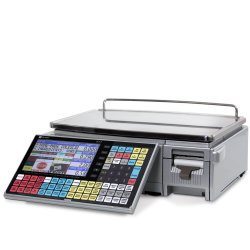
We were recently requested to “check” some scales for a new owner of an already established business. This business almost solely relied on every sales transaction to be weighed and price calculated on these scales. A very typical application as used in Fruit and Veg, Butchers or Seafood Markets and the like.
It was immediately apparent when we arrived that there were going to be some issues. The scales were on top of an unlevel display cabinet and rocked side to side. A quick check with 5kg weight and we were shocked. The display was showing 4.974kg. They were 26g out! Almost the same result on every scale. Immediately we demonstrated this to the owner. He was initially shocked too but then the look of frustration swept across his face as he realised that the store was “giving” away product. At the time they didn’t realise how much.
We asked to look at the reports from the past week. A scan of these determined the average weight of the product in each transaction and the number of transactions per day. An easy calculation and it was determined that they were losing up to $30-$40 per scale per day.
As any reasonable person would they gave us approval to “do whatever it takes” to rectify the situation. Some new leveling feet, a bracket to stop the scales moving on the counter and calibration was all that was needed to solve the issue.
Why a little bit matters.
Let’s set up another scenario with some real numbers:-
Your average product sells for $7.99 per Kg.
The average weight sold is 1.75Kg per transaction.
Your scales are weighing under by 5g at that weight.
Your average 110 customers per day.
You average 4 items per customer.
Your losses:-
$7.99 x 0.005Kg x 110 customers x 4 items = $17.58 per day
That’s $123 per week or a staggering $6,400 per year.












Leave A Comment
You must be logged in to post a comment.