
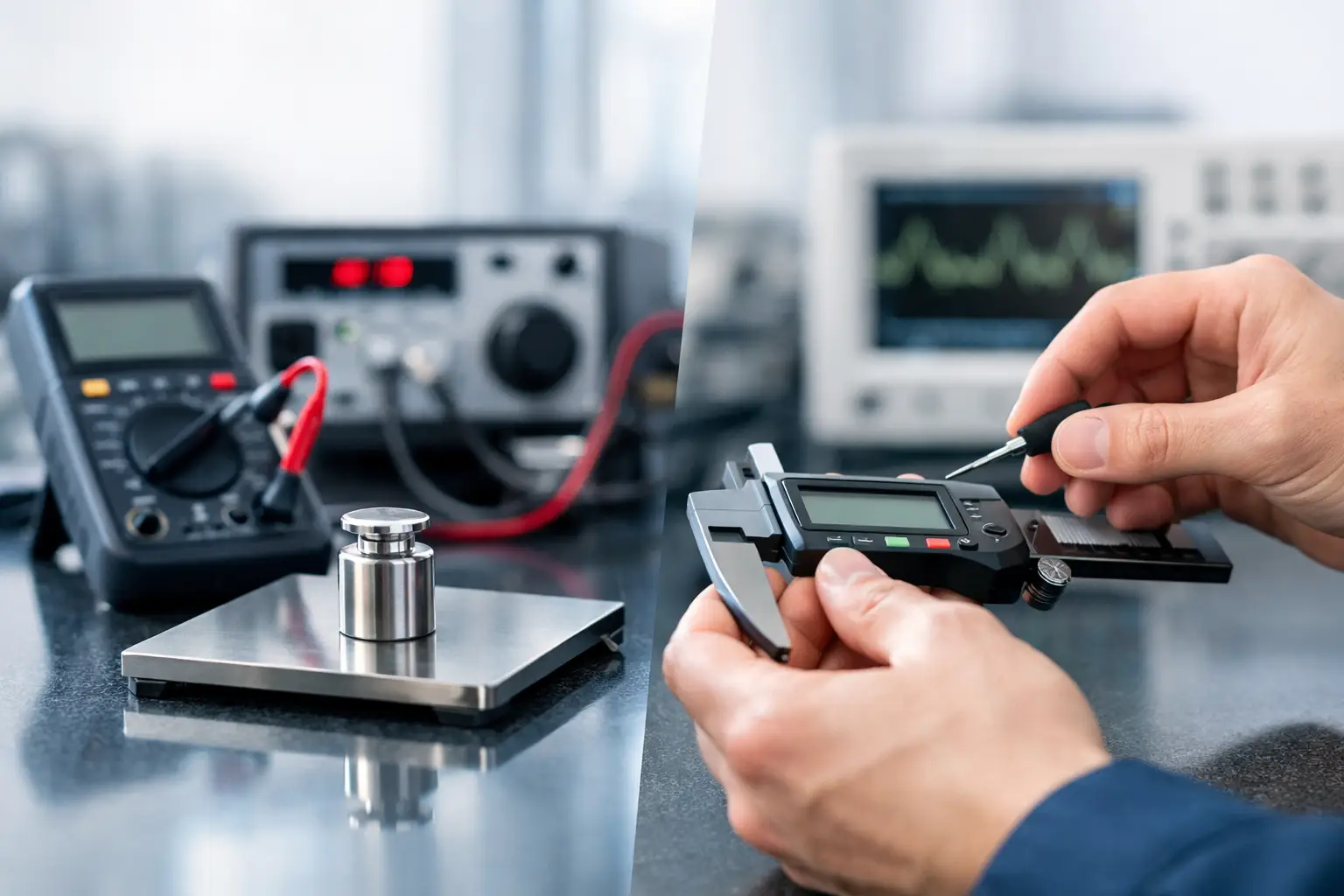
A scale can look fine on the bench, power on without an issue, and still cost you money if it is reading outside tolerance. That is where the difference between calibration verification vs adjustment matters. For cafés, butchers, grocers, market operators and other businesses relying on accurate weighing, these two terms are not interchangeable, and treating them as the same can create compliance problems, stock loss, pricing errors and unnecessary service costs.
What calibration verification vs adjustment actually means
Calibration verification is the process of checking whether a device is reading accurately enough against a known standard. In simple terms, you are testing the scale to see if it is within the required tolerance. You are measuring performance, not changing it.
Adjustment is different. Adjustment means altering the scale so its readings move back into specification. That might involve using internal settings, service modes or manufacturer procedures to bring the instrument closer to the correct result.
This distinction matters because a business owner might say, “The scale has been calibrated,” when what actually happened was a verification check only. Someone else might say, “It just needs a quick calibration,” when the unit really needs adjustment and then another verification to confirm it is reading correctly. Using the right term helps everyone understand the condition of the equipment and what work has actually been done.
Why the difference matters in day-to-day operations
In a busy shop or food service environment, accuracy is tied directly to revenue, customer trust and compliance. If a deli scale is under-reading, you may be giving away product. If it is over-reading, you risk charging customers too much. Neither outcome is good for the business.
Verification gives you confidence that the equipment is performing as expected at that point in time. It is a check. Adjustment is a corrective action when the check shows the scale is not where it should be.
That difference also affects planning. If you book a verification, the technician arrives expecting to assess accuracy. If the scale fails the check and requires adjustment, extra time, tools, approvals or follow-up testing may be needed. In some cases, especially with trade-approved equipment, there are compliance steps that need to be considered as well.
Calibration verification vs adjustment in trade-approved scales
For businesses using trade-approved weighing equipment, the stakes are higher than simple internal quality control. If a scale is used for trade, such as selling produce, meat, bulk foods or takeaway items by weight, it needs to meet legal requirements.
In that setting, verification is about confirming the instrument is operating within allowed tolerances for trade use. Adjustment is what may be required if it is not. A scale that has been adjusted is not automatically ready for trade use just because someone has changed the reading. It still needs to be checked properly afterwards.
This is where working with a licensed provider becomes important. There is a big difference between a general service call and a service carried out by technicians who understand trade measurement obligations, scale class, approved use and the practical realities of retail operations. For many businesses, the safest path is to have the same experienced team handle testing, adjustment and any required follow-up so nothing is missed.
When verification is enough
Not every service visit ends with an adjustment. In many cases, verification is exactly what is needed.
If your scale has been stable, has not been moved, is operating in a consistent environment and is already reading within tolerance, a verification confirms it is still fit for purpose. That can be useful as part of routine maintenance, compliance scheduling, internal quality checks or after installation.
Verification is also valuable after transport or relocation. Even if the scale appears to be working, movement, vibration, bench changes and levelling issues can affect performance. A quick check can catch a problem before it impacts sales.
For businesses with multiple locations, regular verification can also help identify patterns. If one site repeatedly drifts out while another remains stable, the issue may not be the scale itself. It could be how the equipment is being handled, cleaned, levelled or exposed to heat, moisture or heavy vibration.
When adjustment is necessary
Adjustment is needed when verification shows the readings are outside the acceptable range, or when there is clear evidence the scale has drifted. That drift can happen for several reasons.
Normal wear is one factor. Load cells, connectors and internal components can change over time. Environmental conditions matter too. Heat, humidity, dust, grease and unstable benches can all affect weighing performance. So can accidental knocks, overload events or moving the unit from one site to another.
Sometimes the issue is simple and sometimes it is not. A scale may only need re-levelling and adjustment. In other cases, the failed verification is really a symptom of a larger fault, such as damaged components or contamination inside the unit. That is why it is risky to assume every accuracy issue is solved by adjustment alone.
A proper technician will not just force the reading to match once and leave. They will look at whether the instrument is stable, repeatable and suitable for continued use. If there is an underlying fault, it should be addressed before the business relies on the equipment again.
Why “just adjust it” can be the wrong call
It is understandable that many operators want the quickest fix. When the lunch rush is coming or the market opens early, downtime is the last thing you need. But adjusting a scale without first verifying the problem can create more trouble than it solves.
If the issue is caused by an uneven surface, a damaged foot, poor power supply or internal fault, adjustment may only mask the symptom temporarily. The scale may pass a basic check straight after service and drift again soon after. That means another call-out, more disruption and less confidence in the equipment.
There is also a record-keeping and compliance side to this. From an operational point of view, it is useful to know whether the unit passed as found, failed and was adjusted, or failed due to a hardware problem. That information helps with maintenance planning and replacement decisions.
How often should scales be verified or adjusted?
There is no one schedule that suits every business. It depends on the type of scale, how heavily it is used, the environment it works in and whether it is used for trade.
A butcher shop using a bench scale all day has different risks from a boutique retailer weighing occasional parcels in the back room. A market operator loading gear into a vehicle every week will likely need more frequent checks than a scale sitting permanently on a stable counter.
As a practical approach, verification should be part of routine servicing and done whenever there has been a significant event such as relocation, overload, impact or unexplained reading changes. Adjustment should be carried out when the verification results show it is needed, not simply on a calendar because the word sounds familiar.
For many businesses, the best arrangement is a scheduled maintenance plan with a local service team that knows the equipment, the site and the consequences of downtime. That makes it easier to catch issues early and keep the business running without guesswork.
Choosing the right service partner
When accuracy affects sales and compliance, you want more than someone who can press the right buttons. You want a technician who can test properly, explain the result clearly and tell you whether the scale needs adjustment, repair or replacement.
That is especially true for operators across Southeast Queensland who need timely support, practical advice and minimal interruption to trade. A reliable service partner should understand both the technical side and the day-to-day reality of your business. If a scale goes out on a Friday morning, you do not need vague language. You need a clear answer on what is wrong, what needs to happen next and how quickly you can get back to normal.
At EBE, that service-first approach is central to how weighing equipment support is delivered. Verification and adjustment are handled as part of the bigger picture – keeping business-critical equipment accurate, compliant and ready for daily use.
The simplest way to think about it is this: verification tells you where the scale stands, while adjustment changes where it stands. One is the check, the other is the correction. Knowing the difference helps you book the right service, ask better questions and avoid small accuracy issues turning into bigger operational headaches.













Leave A Comment
You must be logged in to post a comment.