
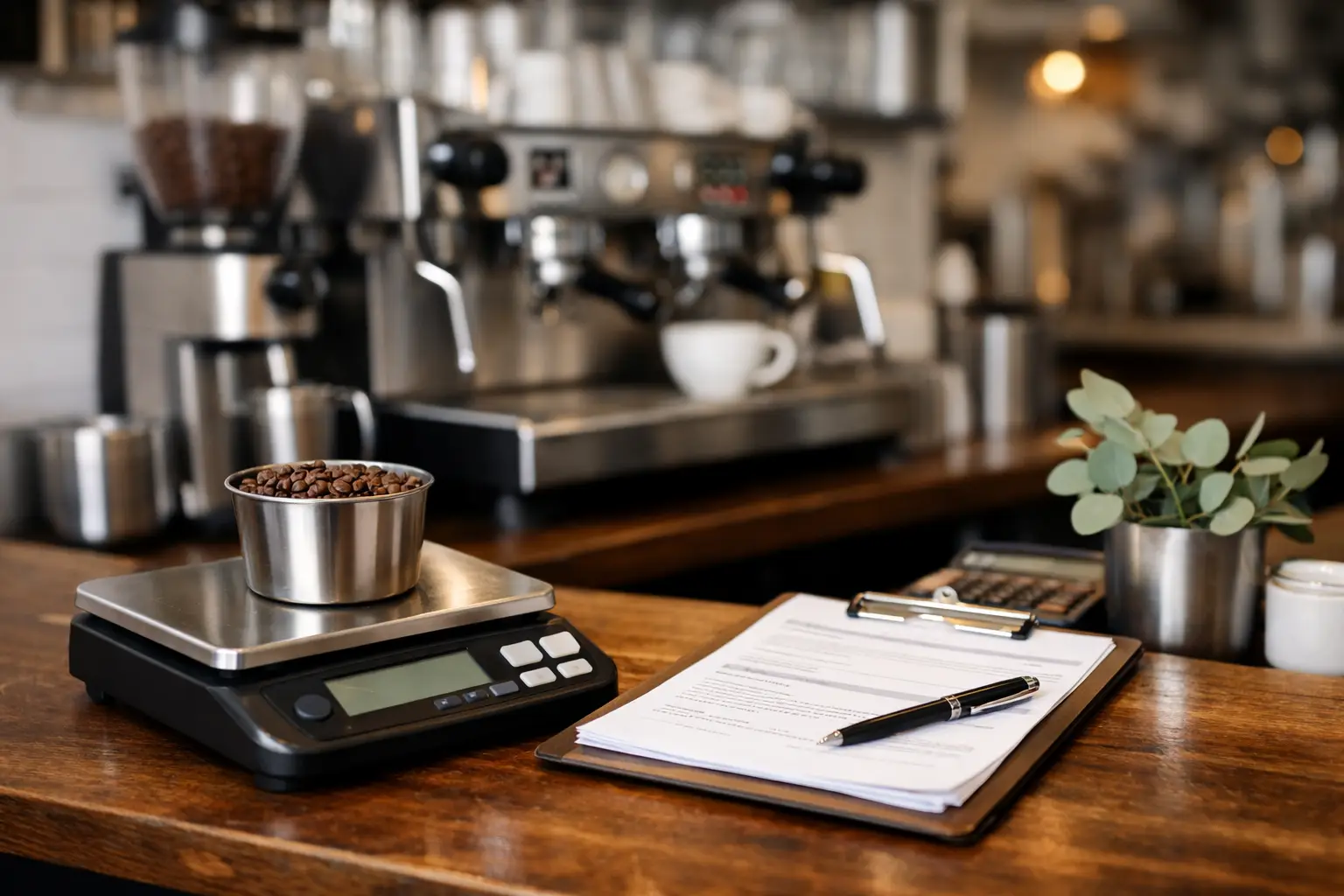
A cabinet full of salads, cakes and takeaway meals can move quickly through a busy lunch service. But if your cafe charges customers by weight, the scale is not simply a kitchen tool. This cafe scale compliance example shows what needs to be in place when a Sunshine Coast cafe sells food at a price per kilogram.
The central rule is straightforward: where weight determines the price a customer pays, the scale must be suitable for trade use. A reliable setup protects customers from being overcharged, protects the business from incorrect pricing, and gives staff a clear, repeatable process at the counter.
A cafe scale compliance example in practice
Consider a busy cafe with a self-serve salad bar and a deli-style display of prepared meals. Customers select food, bring it to the counter, and staff charge $32.00 per kilogram. The cafe also sells coffee beans by weight and pre-packed granola in fixed-size bags.
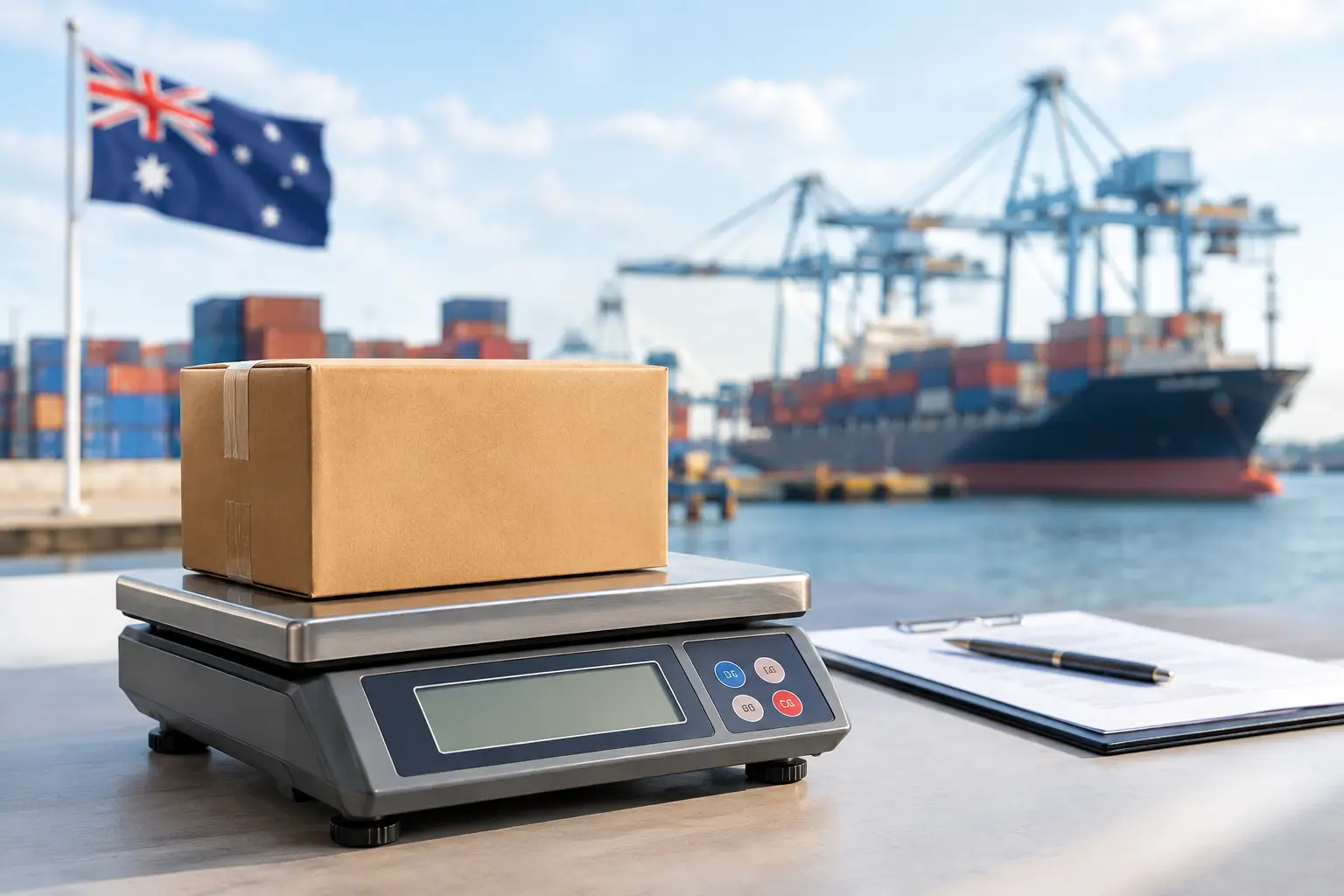
The salad bar and coffee-bean scales are being used for trade because the final amount charged is calculated from the weight. The cafe needs a trade-approved scale that has been correctly verified for use in trade. Its capacity and readability must also suit the products being sold. A small, low-capacity bench scale may be fine for coffee beans, but it may not be appropriate for heavier takeaway containers or large salad bowls.
The pre-packed granola is a different situation. If every bag is sold at one set price rather than by its measured weight at the point of sale, the counter scale is not calculating the transaction. However, the business still has obligations around pack quantity and accurate labelling where relevant. The equipment and process need to match the way the product is actually sold.
This distinction catches out many operators. A scale can look professional and provide accurate-looking readings, yet still not be compliant for selling goods by weight. Kitchen scales, portion-control scales and low-cost online scales are often useful for preparation, but they are not automatically legal-for-trade instruments.
What a compliant counter setup looks like
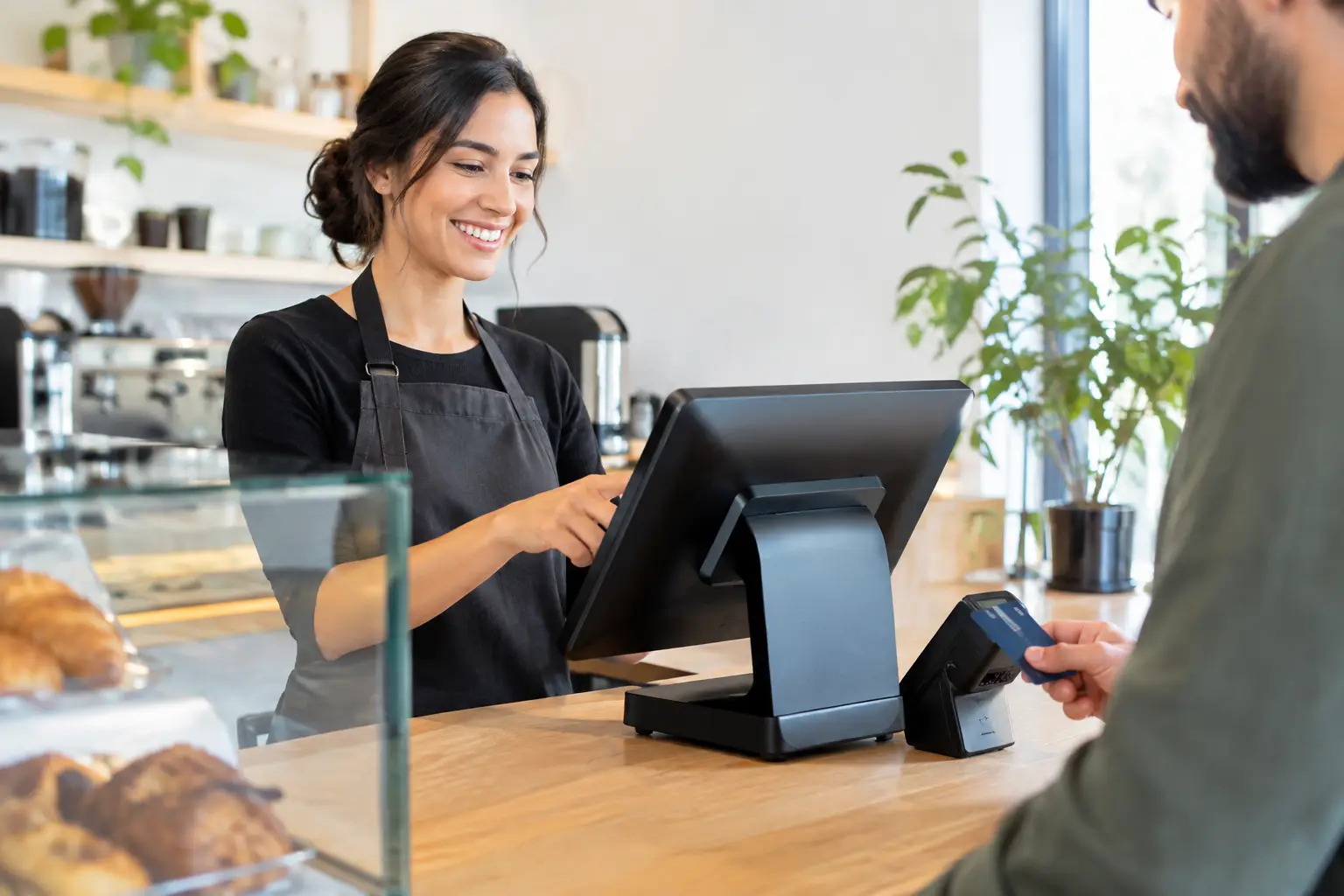
For the salad bar, the cafe selects a trade-approved retail scale with a customer-facing display. The operator display lets staff work efficiently, while the customer display shows the weight and price clearly as the sale is completed. This transparency is practical as well as compliant: customers can see what they are paying for without relying on a verbal total.
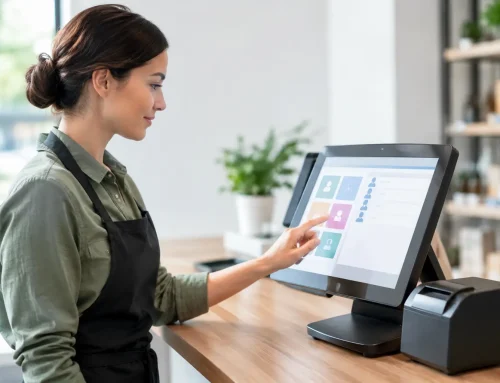
A licensed technician verifies the scale after installation and applies the required verification marking. The scale is positioned on a firm, level bench away from vibration, heat, splashes and air movement from fans or open doors. It is connected to the POS system so the price-per-kilogram item is configured correctly and the calculated price transfers without staff having to re-enter it.
The team sets up the product key at $32.00 per kilogram, checks that the displayed unit price is correct, and confirms the POS receipt reflects the same item and amount. If a container is used, staff apply the correct tare before food is added. That means the customer pays for the salad, not the bowl, tray or paper wrap.
For a cafe operating at markets or events, the same principles apply, but the environment needs extra attention. A folding trestle table can flex, uneven ground can affect level, and wind can interfere with a sensitive scale. Portable trade equipment should be set up on a stable surface, protected from the weather, and checked before service begins.
The role of verification
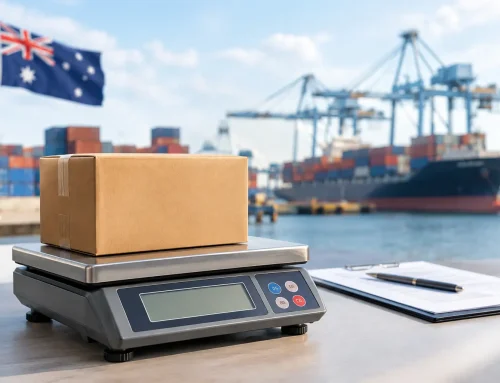
Trade approval and verification are related, but they are not the same thing. The model of scale must be approved for trade use, and the individual instrument must be verified before it is put into service for trade. Verification confirms that the scale is within permitted tolerances when tested and that it is correctly configured for its intended use.
Verification is not a once-only reason to forget about the equipment. A scale can be affected by impact damage, water ingress, a failing load cell, unstable power, movement to another location or unauthorised adjustment. If it has been repaired, relocated or is producing questionable readings, arrange an assessment before relying on it for customer transactions.
Daily checks prevent small problems becoming costly ones
A verified scale still needs sensible daily care. The cafe manager gives the opening staff a simple process: make sure the platform is clean and empty, switch the scale on early enough to stabilise, confirm it reads zero, and test it with a known check weight. The reading should be consistent and return to zero once the weight is removed.
Staff should also look for obvious issues such as a wobbling bench, a damaged cable, a cracked display, moisture around the platform, or a customer display that is blank or hard to read. When a scale is integrated with a POS system, checking a test transaction or confirming the programmed price per kilogram can prevent a pricing error that might otherwise continue all day.
Keep these checks proportionate to the operation. A cafe selling a few bags of beans each week does not need the same routine as a high-volume salad bar processing hundreds of transactions a day. But any business selling by weight should have someone responsible for recognising when a scale is not behaving normally and taking it out of trade use until it is checked.
Tare, packaging and staff habits matter
Compliance is not only about the instrument. It also depends on how people use it. Tare is a common source of avoidable error in cafes because packaging changes throughout the day. A light paper bag, a compostable bowl and a large catering tub do not weigh the same.
The best approach is to create a clear tare process for each regular container type. Some scales can store preset tare values, which improves speed and reduces inconsistency. Staff still need to know when a container differs from the usual size, is wet, or has another item inside it. Guessing the tare may only create a small difference per sale, but repeated errors are unfair to customers and can affect margins.
Training should cover the practical reasons behind the process. Staff are more likely to follow it when they understand that the scale reading is part of the price, not merely a preparation guide. Include the procedure in induction, show staff how to zero and tare the scale, and explain what to do if the display is unstable or the POS price does not match the scale.
Choosing the right scale for the job
The right equipment depends on what the cafe sells and how the counter operates. A compact retail scale may suit coffee, loose-leaf tea and small deli items. A larger capacity model is often better for salads, bulk foods and takeaway meals. For counter service, a dual-display price-computing scale is usually the practical choice because it provides visibility to both staff and customers.
Do not select equipment on capacity alone. Consider the smallest increment the scale can display, the size of the weighing platform, whether it needs to print labels, battery requirements for mobile use, wash-down exposure, and how it will communicate with the POS. A scale that is technically compliant but poorly matched to the workflow can slow service and encourage workarounds.
It is also worth planning for service access. In a food business, a scale that is out of action at 11.45 am can quickly create a queue and force staff back to manual pricing. Local supply, installation, calibration support and repair capability can make a real difference when the equipment is business-critical. EBE works with cafes and food businesses to select, install, verify and support trade-approved weighing equipment around the way their counter actually operates.
When to call for help
Take a scale out of trade use if it will not zero consistently, gives unstable readings, has visible damage, displays an error message, has been dropped, or no longer communicates correctly with the POS. Do not try to compensate by estimating weights or changing prices manually without a clear process. It is better to pause weight-based sales for that item, use an alternative verified scale, or sell it at a clearly defined fixed price where appropriate.
A well-run cafe does not treat scale compliance as paperwork sitting in a drawer. It treats it as part of accurate service: the right instrument, a stable installation, trained staff and prompt support when something changes. That approach keeps the counter moving and gives every customer confidence that the price on the display is the price they should pay.




Leave A Comment
You must be logged in to post a comment.