
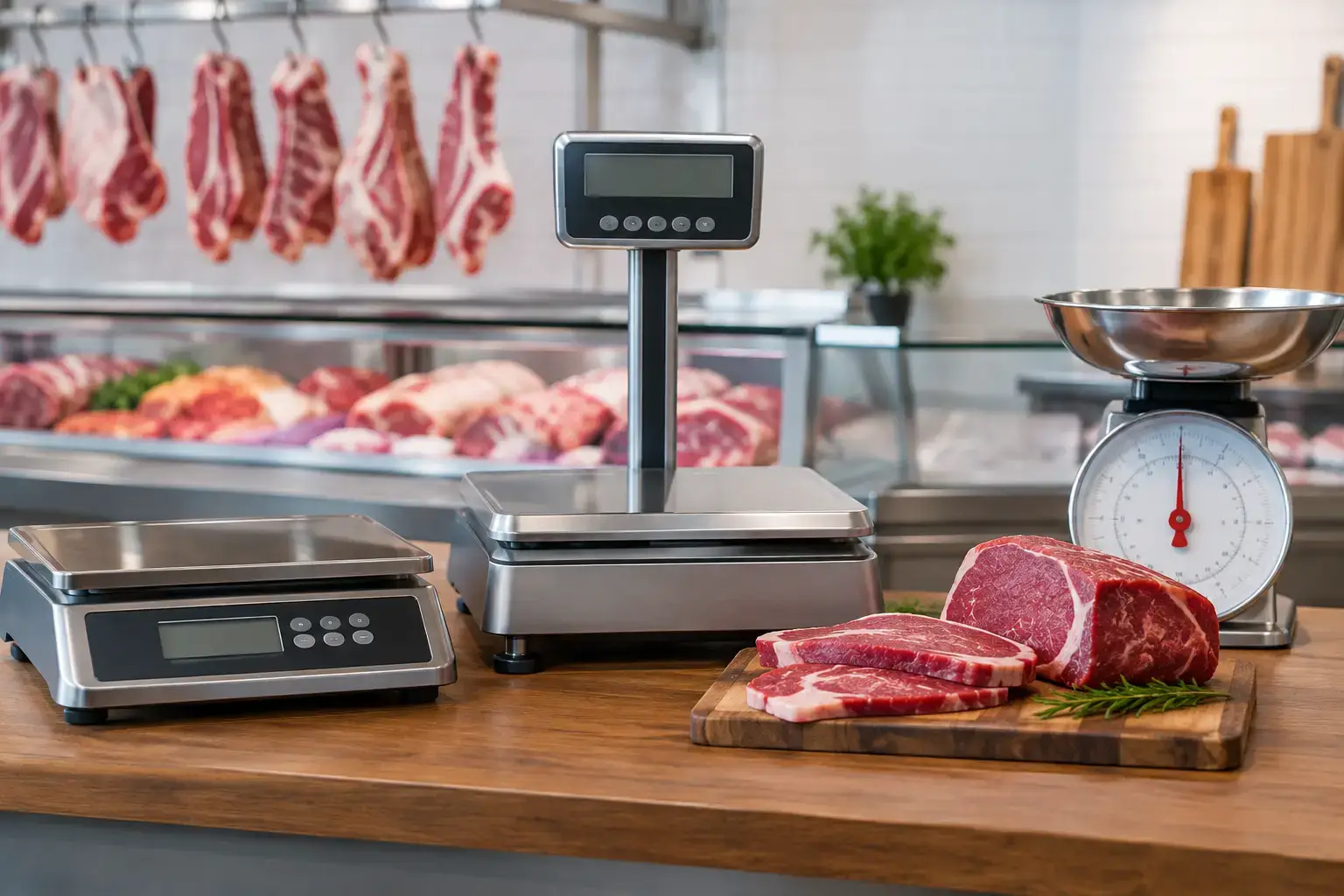
A busy butchery scale does far more than show a weight. It determines the selling price, supports accurate labelling, keeps queues moving and helps staff portion products consistently. When owners ask which scales suit butcheries, the answer is rarely one machine for every task. The right setup depends on how meat is received, prepared, displayed, packed and sold.
For any product sold by weight, the scale must be suitable for trade use. From there, the practical decision comes down to capacity, accuracy, wash-down requirements, label printing, POS integration and the support available when equipment is under pressure.
Start with trade-approved weighing equipment
If a customer is charged according to weight, the scale used for that transaction must be trade approved and verified for use in Australia. This applies whether the product is weighed at the counter, weighed and labelled before going into the display, or packed to a stated weight for sale.
A trade-approved scale is designed and assessed for commercial transactions where weight affects price. Verification confirms that the particular unit is accurate and compliant when installed. It is not the same as buying a general-purpose kitchen scale that appears precise on the bench but is not approved for retail trade.
This distinction protects both the business and the customer. Under-weighing creates complaints and lost trust; over-weighing quietly erodes margin across hundreds of transactions. A correctly selected, verified scale gives staff a dependable starting point every day.
The main scale types used in butcheries
Most established butcheries benefit from a combination of scales, with each unit assigned to a specific part of the workflow. Trying to make one scale manage goods receival, heavy cuts, counter sales and pre-packed labels often creates bottlenecks.
Retail counter scales
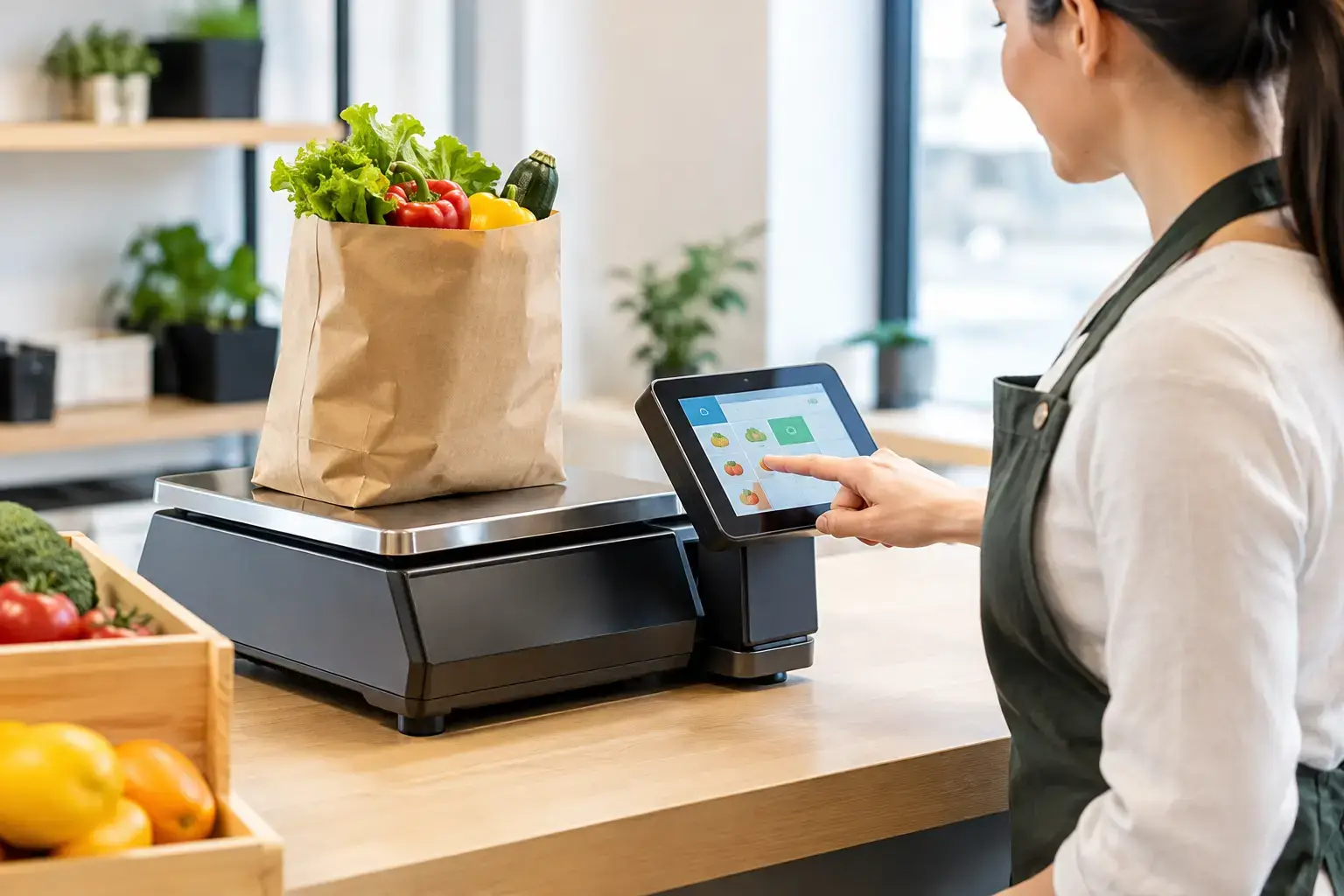
A retail counter scale is the frontline choice for staff serving customers from a display cabinet. It weighs the selected product, calculates the price from the programmed price per kilogram and can show the transaction details to both operator and customer.
For a traditional service butchery, choose a model with an easy-to-read customer display, programmable product keys and a capacity that comfortably covers common family packs, bulk orders and larger cuts. A 15 kg or 30 kg capacity is common, but the best choice depends on what is regularly sold. There is little value in paying for high capacity if it compromises useful low-weight resolution for smaller items.
Counter scales should also fit naturally into the serving area. Consider the footprint, display viewing angle, cable routing and whether the scale needs to communicate with a POS system. When product details, prices and PLUs can be managed centrally, staff spend less time manually keying prices and the risk of mismatch is reduced.
Label printing scales for pre-packed meat
For butcheries that prepare trays, sausages, marinated products or bulk packs before sale, a label printing scale is usually the most productive option. It weighs the pack and prints a label with the required weight and price information, along with product name, barcode, use-by date, ingredients or other details configured for the business.
The biggest advantage is consistency. Staff can pack products in the preparation area, label them immediately and place them in the display ready for sale. At checkout, the barcode is scanned rather than the item being weighed again. This improves speed during peak periods and helps maintain a professional, consistent presentation across the cabinet.
Not every operation needs the same label functionality. A small shop producing a limited range may only require straightforward product labels and barcodes. A higher-volume butcher, supermarket concession or multi-site operator may need recipe information, traceability fields, promotional formats, networked product files and integration with its POS software. The scale needs to match the workflow, not add unnecessary complexity.
Bench scales for preparation and portion control
A dedicated bench scale is valuable in the cutting room or preparation area. It can be used to portion mince, weigh sausage batches, check marinades, prepare customer orders and control pack weights before labelling.
These scales are often selected for ease of cleaning, a stable platform and a display that remains visible while working quickly. Depending on the task, a lower-capacity scale with finer graduations may be more useful than a larger retail counter unit. Accurate portion control helps maintain product consistency while reducing give-away, particularly with premium steaks, schnitzels and value-added lines.
Where the bench scale is used to establish a selling weight or create a priced label, trade approval remains necessary. If it is only used internally for recipe preparation or checking, the compliance requirement may differ, but accuracy and reliability still matter to profitability.
Platform scales for receival and heavy orders
Whole cartons, primal cuts, bulk orders and deliveries can exceed the practical capacity of a countertop scale. A floor or platform scale gives staff a safer, faster way to weigh heavier goods at receival or dispatch.
The platform size should suit the cartons, crates or tubs handled on site. It also needs a capacity that leaves sensible headroom above the heaviest expected load. Buying a scale rated only just above normal use can lead to overload damage and inconvenient workarounds.
For a butchery receiving frequent deliveries, a platform scale can also support stock checks and supplier verification. If delivery weights do not look right, having dependable equipment on site provides a basis for checking the discrepancy before stock is processed.
What to look for in a butchery scale
The environment matters as much as the weighing specification. Meat preparation areas are cold, wet and busy, so equipment must cope with regular cleaning and frequent use. Stainless steel platforms, sealed keypads and surfaces without difficult-to-clean gaps make daily hygiene routines more manageable.
Choose a scale with a practical capacity and division size. Capacity is the maximum load it can weigh; division size is the smallest approved increment shown. A scale needs enough capacity for the products handled, but it must also provide appropriate resolution for the value of the items being sold. Fine accuracy is especially relevant for small, high-value portions, while a receiving scale needs strength and capacity first.
Tare functionality is equally important. Staff should be able to zero the weight of trays, wrapping, containers or tubs quickly, so customers are charged for product rather than packaging. Preset tare options can save time where the same trays are used repeatedly.
A clear display is not a minor feature. In a bright shopfront or a refrigerated preparation room, staff must be able to read weight, unit price and total without hesitation. A customer-facing display also gives customers confidence that the transaction is transparent.
POS integration: helpful, but not always essential
An integrated scale and POS setup can be a sensible investment where the shop has a broad product range, changing prices or high transaction volume. Product names, PLUs and price-per-kilogram data can be managed across the system, helping avoid manual price changes on multiple devices. At the counter, weighed items can be sent directly into the sale, reducing double handling.
For label scales, integration can also make barcode sales cleaner and stock reporting more accurate. The benefit is greatest when the POS, scale and label formats are designed together from the outset.
That said, a stand-alone trade scale may be the better choice for a small operation with a simple range and low transaction volume. It is more important that the equipment is easy for staff to use correctly than that it has features nobody uses. The right supplier should assess the entire workflow before recommending a system.
Plan for cleaning, calibration and downtime
Scales work hard in a butchery. Moisture, fat residue, temperature changes, knocks from trays and constant operation can all affect performance over time. Daily cleaning should follow the manufacturer’s instructions, with care taken around displays, connections and printer components. Never assume that a unit is fully wash-down safe unless it is specifically rated for that environment.
Regular servicing and calibration checks help identify issues before they become a trading or operational problem. If a trade scale is moved, damaged, repaired or begins showing inconsistent readings, it may need inspection and verification before being returned to trade use.
Support is worth considering before purchase, not after a failure. A scale that is central to counter sales or production can quickly become a business interruption when it stops working. Access to local technicians who can install, configure, repair and verify equipment means less time spent trying to find a workaround during service.
Choose scales around the way your shop works
A small artisan butcher may be well served by one retail counter scale, a prep scale and a compact label solution. A high-volume shop may need multiple networked label scales, customer-facing counter scales and a heavy-duty platform scale at receival. Mobile market operators have different priorities again: compact size, dependable power options and equipment that can be transported safely matter as much as capacity.
Before purchasing, map the product journey from delivery through to sale. Identify where products are weighed, who uses the equipment, how often prices change, whether labels are needed and what happens if the main scale is unavailable. This turns the decision from a catalogue comparison into a practical equipment plan.
EBE helps Southeast Queensland businesses select trade-approved weighing equipment, configure it around their POS workflow, and keep it operating through calibration, repairs and local support. The most useful scale is not simply the most feature-rich model. It is the one that stays accurate, suits the workbench or counter, and lets your team serve every customer with confidence.







Leave A Comment
You must be logged in to post a comment.