
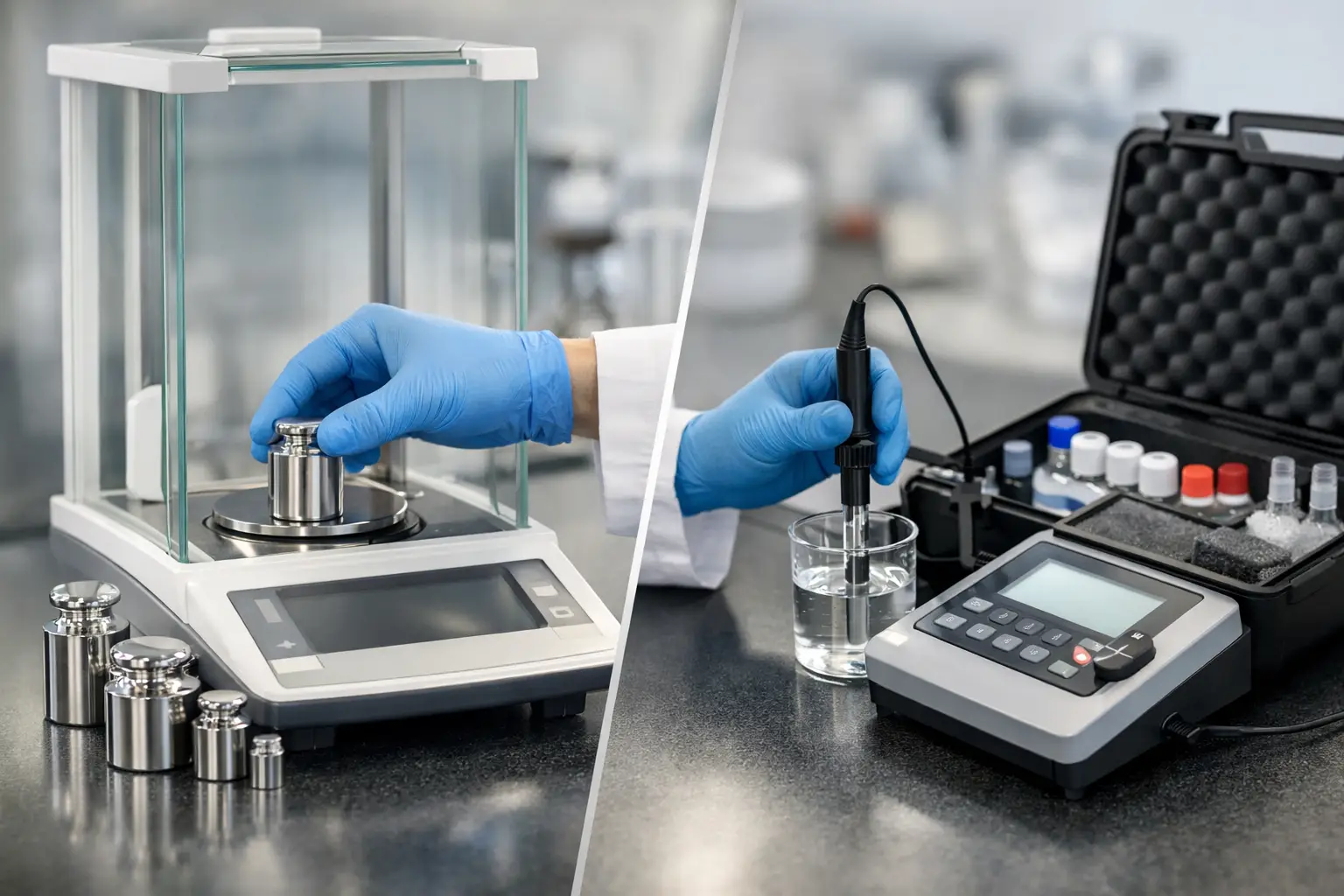
If your business relies on trade-approved scales, test weights, POS-connected weighing systems or measurement equipment, the difference between calibration vs calibration verification is not just technical wording. It affects compliance, accuracy, daily workflow and, in some cases, whether you can legally use the equipment for trade.
For many business owners, the terms sound interchangeable. They are not. Calibration and calibration verification serve different purposes, and knowing which one you need can save time, avoid failed inspections and prevent costly mistakes at the counter, in the prep area or on the loading dock.
What calibration vs calibration verification actually means
Calibration is the process of checking a measuring instrument against a known standard and identifying how accurate it is across its operating range. In plain terms, a technician tests your scale or device using certified reference standards and records whether the readings are correct, high or low.
Depending on the equipment and service scope, calibration may also include adjustment. That means the technician does not just measure the error – they correct it so the equipment returns to an acceptable level of accuracy. In practice, people often use the word calibration to cover both testing and adjustment, but technically they are not always the same thing.
Calibration verification is different. Verification confirms that the equipment meets the required legal or operational standard at the time of testing. For trade use equipment, this is especially important because verification is tied to compliance. It is the formal check that says the device is suitable to be used for commercial transactions where weight determines price.
That distinction matters. Calibration tells you how the instrument is performing. Verification confirms whether it passes the required standard for use.
Why the difference matters in real business settings
In a busy food business, retail environment or market operation, small weighing errors can become big issues quickly. If a deli scale is under-reading, you may be giving away product. If it is over-reading, customers may be overcharged. Neither outcome is good for business.
This is where calibration vs calibration verification becomes practical, not academic. Calibration supports accuracy and consistency. Verification supports legal compliance and customer confidence. Many businesses need both, but not always at the same time or for the same reason.
A café portioning ingredients for internal recipes may need regular calibration checks to maintain product consistency. A butcher, grocer or market trader selling by weight needs equipment that is not only accurate but also verified for trade use. The same piece of equipment can sit in both worlds – one operational, one regulatory.
Calibration helps you control accuracy
Calibration is often the right service when your main concern is performance. Perhaps staff have noticed odd readings. Perhaps the scale has been moved, knocked or exposed to heavy use. Perhaps you simply want to keep your equipment within tolerance as part of a preventive maintenance schedule.
This kind of service gives you a clear picture of how the equipment is behaving. It can identify drift over time, reveal repeatability issues and highlight whether the unit still performs reliably under normal operating conditions.
For businesses with multiple sites or multiple scales, regular calibration also helps standardise operations. If every unit reads slightly differently, stock control, portioning and pricing can become inconsistent. That creates avoidable waste and confusion, particularly when staff move between locations.
Calibration verification is about compliance
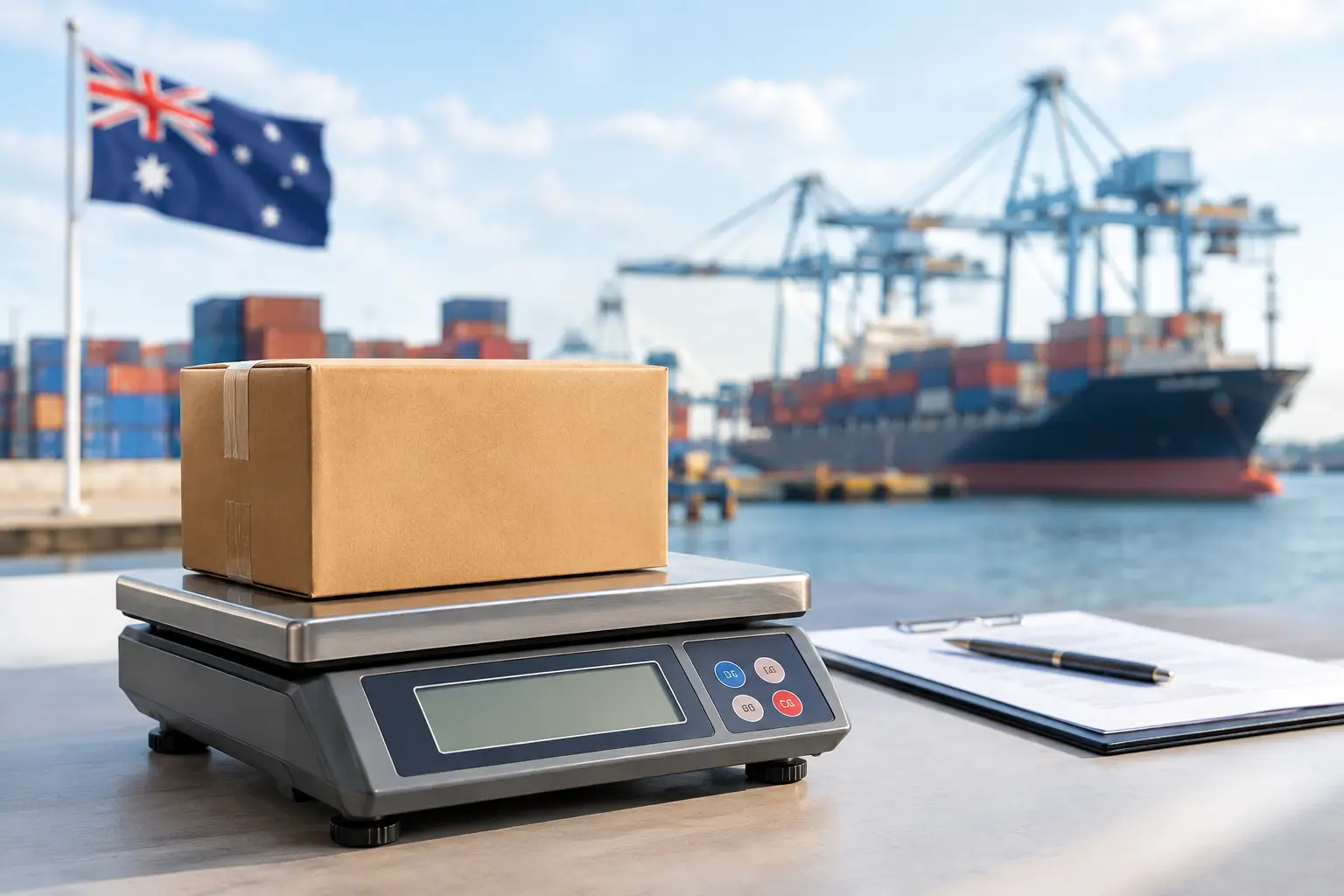
Verification becomes essential when the equipment is used for trade. In Australia, measuring instruments used in commercial transactions must meet legal requirements. If you sell goods by weight, the scale must not just be close enough – it must satisfy the relevant standard for trade use.
That is why verification is more than a maintenance task. It is a compliance requirement. A verified scale gives you a level of protection as an operator because it shows the equipment has been formally assessed for legal use.
This is particularly relevant for retailers, fresh food operators, takeaway venues, produce sellers, event vendors and any business charging customers based on measured quantity. If your equipment is not properly verified, you risk non-compliance, disputes and interruptions to trading.
When you might need one, the other, or both
There is no single answer that fits every business. It depends on what the equipment is used for, whether it is trade-approved, and what level of documentation or legal compliance is required.
You may only need calibration if the device is used internally for process control, batching or recipe consistency rather than direct sale by weight. You may need verification if the instrument is used in a trade setting and legal approval is required. In many cases, businesses benefit from both – calibration to manage ongoing accuracy and verification to confirm compliance.
For example, a restaurant using a bench scale in the kitchen for prep may focus on calibration. A seafood retailer using a customer-facing scale to calculate sale price will need verification. A business running both back-of-house and front-of-house weighing equipment may need a mixed approach.
That is why a proper assessment matters. The right service depends on the role the equipment plays in your operation, not just the name printed on the device.
Common situations that affect both
Even high-quality equipment can drift or fail if conditions are not ideal. Scales and measuring systems are sensitive to placement, handling and environment. Moving a unit, placing it on an uneven bench, exposure to grease or moisture, power issues and plain wear and tear can all affect accuracy.
Busy venues often assume that if a scale still turns on, it is fine. That is a risky assumption. An instrument can appear normal while reading outside tolerance. The problem may not be obvious until stock figures stop matching, customers question pricing or an inspection picks it up.
Regular servicing helps catch those issues earlier. It also gives technicians a chance to spot related problems such as damaged load cells, unstable power supplies, connectivity faults with POS systems or print issues affecting labels and receipts.
What to ask before booking a service
If you are unsure whether you need calibration, calibration verification or both, start with the purpose of the equipment. Ask whether it is used for trade, whether it is customer-facing, whether it feeds directly into pricing, and whether your business needs formal compliance records.
It also helps to consider what has changed. Has the equipment been relocated? Has it started giving inconsistent readings? Has it recently been repaired? Are you opening a new site or preparing for an inspection? Those details shape the right response.
A technician should also ask about the make and model, capacity, use conditions and whether the unit is trade-approved. Good advice is not about selling the biggest service package. It is about matching the service to the risk and the application.
Why local technical support makes a difference
For many Southeast Queensland businesses, downtime is the real cost. If a scale is out of action in the middle of a trading day, you need fast answers, not a long chain of emails or freight delays. That is where working with a local technical team matters.
A provider with hands-on experience in supply, installation, calibration, verification and repairs can usually diagnose issues faster because they understand how the equipment fits into the broader workflow. They are not just looking at a scale in isolation. They are looking at the counter setup, the POS integration, staff usage and the compliance requirements around the equipment.
That practical view matters more than most businesses realise. The right support partner helps you avoid repeat faults, choose suitable equipment from the start and keep everything working as intended under real trading conditions.
A more practical way to think about it
If you want the simplest distinction, think of calibration as checking and correcting accuracy, while calibration verification confirms the equipment meets the required standard for its intended use. One focuses on performance. The other focuses on proof.
Both are valuable, and for many operators they work best together. Accurate equipment supports fair transactions, tighter stock control and smoother service. Verified equipment supports legal compliance and confidence at the point of sale.
If you are not sure what your business needs, do not guess. The safest approach is to have the equipment assessed by a qualified team that understands trade use, servicing and real-world business pressure. When measurement equipment is part of how you get paid, accuracy is not something to leave to chance.






Leave A Comment
You must be logged in to post a comment.